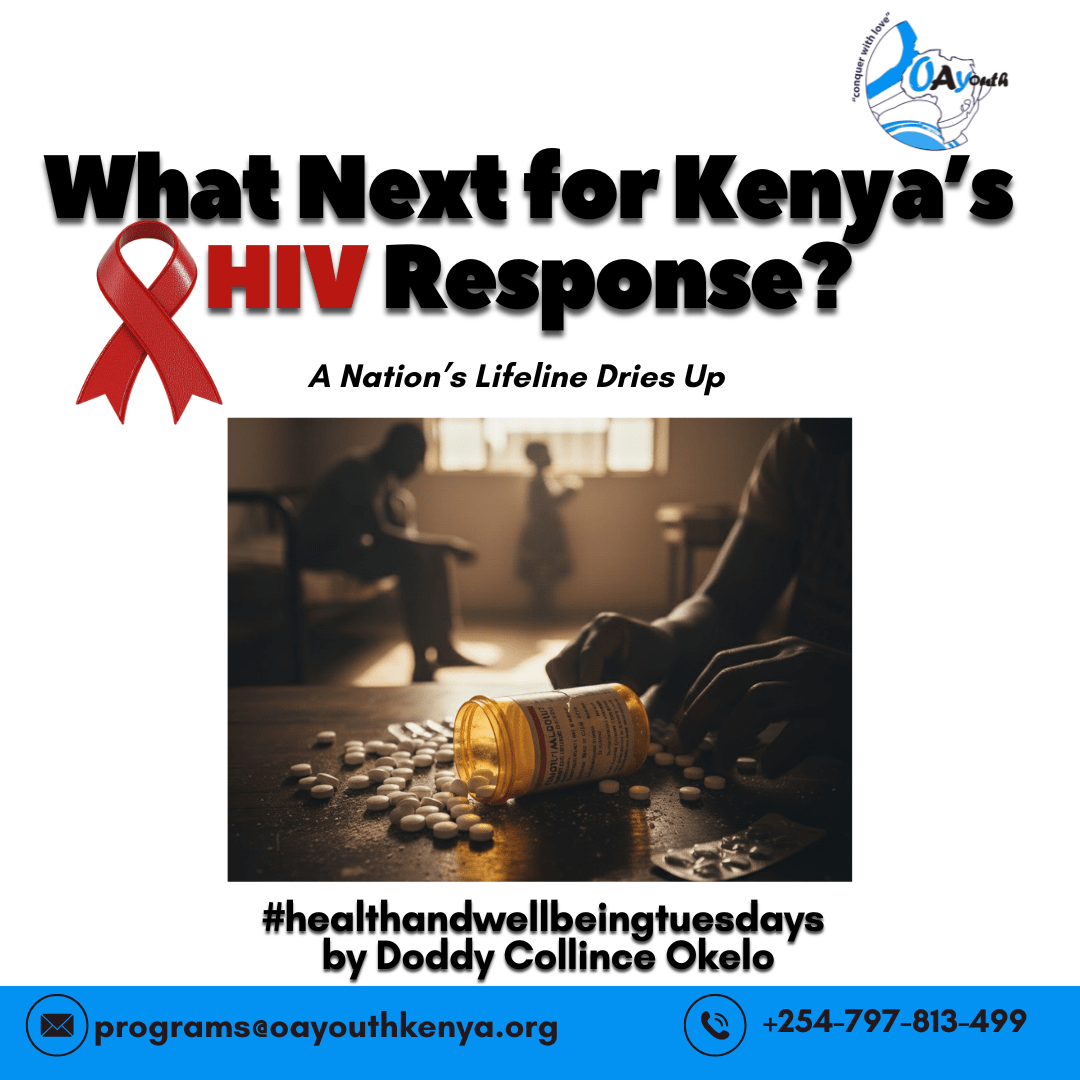
Otieno, a resident of Kamwango in East Kamagambo, Rongo Sub-county, sits on the edge of his bed, the weight of the world pressing heavily upon his shoulders. He looks at his wife, Achieng, who is meticulously organizing their remaining ARV tablets, and their seven-year-old daughter playing by the window. For years, those pills have been their lifeline, a daily ritual of survival. But the news on the radio is cold. Following the transition in Washington on January 20th, 2025, and the looming impact of March 2026, the whispers in the clinic queues have turned into a dull roar of panic. He hears that the containers might stop coming, and the thought of the virus waking up in his daughter’s blood because of a political shift thousands of miles away is a terror no father should carry.
For 23 years, Kenya has been receiving roughly 69% of its HIV funding from the United States Agency for International Development (USAID) and the United States President’s Emergency Plan for AIDS Relief (PEPFAR). This massive investment, totaling over 8 billion dollars (approximately 1.1 trillion Kenyan shillings) was the backbone of the national response, paying for the very ARVs Otieno’s family is counting on, the laboratory reagents for viral load testing, and the salaries of over 40,000 health workers, nearly 18% of the country’s total health workforce, who now face an uncertain future.
The crisis has ceased to be a storm on the horizon, it has become the drying of the well, a sudden, natural silence where the ever-flowing vein of supply once lived long. Since the executive freeze in early 2025, approximately 34 million dollars (4.5 billion Kenyan shillings) worth of life-saving commodities have been caught in a logistical gridlock. This disruption was triggered by a stop-work order that deactivated the payment and distribution systems managed by U.S.-funded agencies. By March 2026, the buffer stocks that once protected patients like Otieno from supply shocks will have run dry. In many facilities, doctors have been forced to ration medicine, moving from three-month prescriptions to one-week emergency packs, a desperate measure to ensure that at least everyone gets something, even if it isn’t enough.
To bridge this gap and heal the mess of daily adherence, there is a growing call to develop and deploy long-acting treatments for reactive individuals. While currently available injections like Cabenuva require a visit every two months, the dream is to innovate even further, creating a once or twice yearly injection specifically for treatment. Such a breakthrough would be the ultimate sustainability tool by replacing 365 daily reminders with just one or two clinical visits, the government could drastically reduce the logistical nightmare of monthly pill distribution. It would solve the adherence crisis for families like Otieno’s, ensuring that even if a shipment is delayed or a clinic is crowded, their protection remains locked in their blood for months. This transition to long-acting treatment is the missing piece that could turn the tide, making the 2030 goal of zero transmission a reality by removing human error and pill fatigue from the equation.
The physical landscape of care is also shrinking. Community Drop-In Centers, which provided a refuge for vulnerable groups to receive medication away from the prying eyes of the general public, have begun to shut their doors as their rent and staff costs were tied directly to the now-paused U.S. grants. This has pushed thousands of patients back into overcrowded outpatient clinics where stigma remains a biting reality. The shift is driven by a fundamental pivot in U.S. foreign policy toward domestic rescissions, clawing back billions in global health aid and leaving a Sh30 billion hole in Kenya’s 2026 health budget.
The Kenyan government has responded with urgency and strategic redesign. Health officials, led by the Ministry of Health, are frantically working to integrate HIV services into the new Social Health Authority (SHA). The goal is to move HIV care from a donor-funded silo into the national insurance framework, essentially treating it like any other chronic condition. To prevent a total stockout, the government is also fast-tracking licenses for local pharmaceutical companies to manufacture ARVs within Kenya, aiming to break the cycle of dependency on foreign shipments that can be halted by a single signature in a foreign capital.
Sustainability is the ultimate goal, but it is a bridge built under fire. The National Treasury is being asked to ring-fence emergency funds to unlock meds held in private warehouses, while civil society groups under the National Empowerment Network of People living with HIV in Kenya (NEPHAK) have taken to the streets to demand that laboratory tests, like viral loads and CD4 counts, remain free under the new insurance scheme. While the move toward a Kenyan-led, self-reliant system is the only long-term solution, for Otieno’s family, the immediate reality is a month-by-month struggle to stay undetectable while the country waits for the first gears of its own factories to turn with purpose.
@doddyokelo


 okelododdychitchats